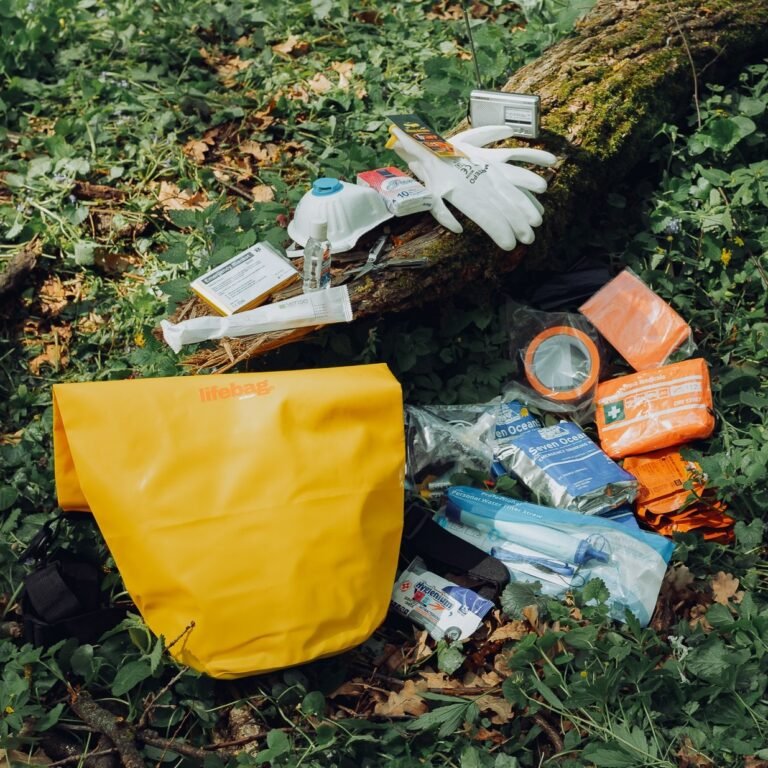
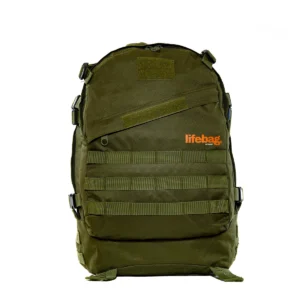
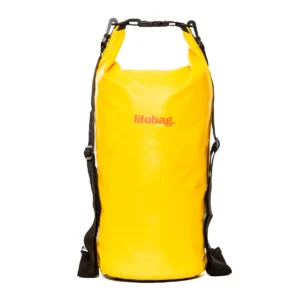
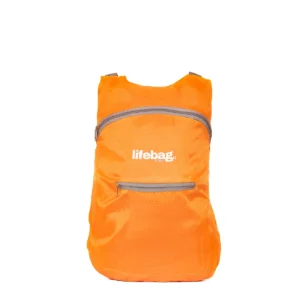
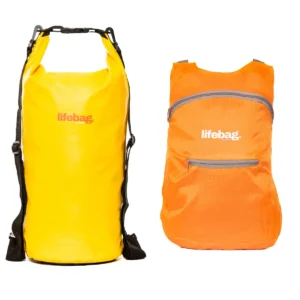
Your LifeBag is packed so you can manage the first 72 hours of an emergency. It works best if you know what is inside before you need it. Take ten minutes to unpack it once, read this guide, and pack it back. Here is how to use each item, and the mistakes to avoid.
Water and food
- Water sachets: tear open at the notch and drink in small amounts spread over the day. Each kit holds 1.5 litres, enough to get you through a short time away from home. At home, keep extra water: about 3 litres per person per day.
- Emergency rations: no cooking needed. Divide them over three days and drink water with every portion, because the rations are dry.
- Storage: water and food last up to 5 years. Keep the bag out of direct sun and away from heat.
LifeStraw water filter (LifeBag Plus)
- Lets you drink directly from fresh water: a river, lake, rain barrel or tap water you do not trust.
- Before the first sip, suck a few times until water comes through. After use, blow air back through it to clear it, and let it dry with the caps off.
- It filters out bacteria, parasites and dirt. It does not remove salt, chemicals, fuel or viruses: never use it for sea water or flood water near roads, farms or factories.
Radio, light and power
- Radio: when power and internet are down, the radio is your link to official information. In the Netherlands your regional public broadcaster is the official calamity station. Look up its frequency now and write it on your pocket guide.
- 3-in-1 radio, light and power bank (LifeBag Plus): charge it with the hand crank or by leaving the solar panel in daylight. Connect your phone with a USB cable to charge it. Charge it fully every few months while it is in storage.
- Flashlight: test it every six months. Keep the spare batteries in the bag and replace them every few years.
- Glow stick: bend it until the inside snaps, then shake. It gives light for hours without heat, flame or sparks, so it is the safest light if you smell gas and a good night light for children. It works only once.
Protection
- FFP2 and FFP3 masks: protect against dust, ash and smoke particles. Bend the nose clip to your nose, cover nose and chin, and breathe out hard to check that no air escapes at the edges. Masks do not stop toxic gases: with chemical smoke, go inside and close windows and doors.
- Disposable masks: for hygiene, for example when someone is ill or when giving first aid.
- Gloves: use the vinyl gloves for first aid and hygiene, and the rubber work gloves (Plus) for clearing debris and cleaning up.
- Poncho: wear it over yourself and your backpack. In a pinch it is also a groundsheet or a small rain shelter.
- Thermal blanket (Plus): wrap it snugly around your body and head, leaving your face free, with the silver side towards you to keep body heat in. Put something between you and the cold ground. The shiny surface is also easy for rescuers to spot.
First aid
- Open the first aid kit now so you know what is in it.
- Clean small wounds with clean water and cover them with a plaster or dressing. For heavy bleeding, press firmly on the wound with a dressing and call 112.
- Replace anything you use, and check the kit after 3 years.
- A first aid course (EHBO) is the best addition to any kit.
Tools
- Multitool and knife: for opening packaging, cutting tape or rope and small repairs. Fold the blades away after use and keep them out of reach of children.
- Lighter (Plus): only outdoors or in a well-ventilated space, and never if you smell gas.
- High-visibility duct tape (Plus): repairs, sealing a broken window with a garbage bag, holding a splint in place, or marking where you are.
- Whistle: blow three short blasts, pause and repeat. It is the international signal for help and carries further than your voice, without tiring you.
Hygiene and storage
- Wet wipes, tissues, hand gel and dental kit: keep yourself clean when there is no running water. Clean hands prevent illness.
- Garbage bags: for waste, as a liner for an emergency toilet, or as a rain cover.
- Resealable bags: keep your phone, cash, medication and copies of documents dry.
After an emergency
Restock what you used, recharge the radio and replace the batteries if needed. Then put the bag back in its place by the door, ready for next time. For what to add yourself, read Personal Items Worth Adding to Your Emergency Backpack.