In an earthquake you stay; in a fire you run. The best response to an emergency depends on the type of threat, and the wrong choice can put you at more risk than the event itself.
This guide gives you a simple way to decide, before the pressure is on, whether to leave or to stay where you are.
1. Official Instructions Come First
If the authorities tell you to evacuate or to shelter in place, follow that instruction. They know the extent of the danger, the routes that are open and where help is organised. Check NL-Alert, the website of your safety region, local radio or television, and call 112 if you are in immediate danger.
2. Usually Shelter Where You Are
- Toxic smoke or chemical clouds: go inside, close windows and doors, switch off ventilation and listen for updates.
- Severe storms: stay inside, away from windows, and do not travel unless you must.
- Civil unrest or violence in the street: stay in, lock doors and stay away from windows.
- Heatwaves and prolonged power cuts: usually it is safest to stay at home with water, light and warmth, unless the home itself becomes unsafe.
- During an earthquake: drop, cover and hold on until the shaking stops. Do not run outside.
3. Usually Evacuate
- Fire in or near your building: leave immediately and call 112 from outside. Never go back inside for belongings.
- Gas leak or suspected explosion risk: leave without using switches or flames, and call from a safe distance.
- Serious flood risk when instructed by the authorities: follow the evacuation route that is announced.
- Damaged or unstable building after an earthquake or an impact.
- A direct order to leave from the authorities.
4. A Simple Four-Step Check
- Get information. NL-Alert, radio, 112 or the safety region website.
- Ask where the danger is. Is it inside your home, or outside it?
- Ask which choice keeps you safer. Can you reach a safer place quickly, or would moving expose you to the hazard?
- Decide, tell someone and act. Let your family or neighbours know where you are going.
5. If You Evacuate
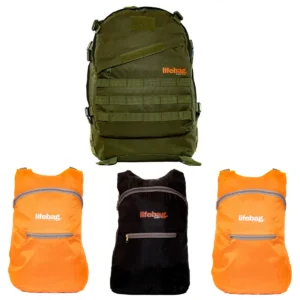
- Take your emergency bag, phone, medication, keys and documents.
- Take pets in a carrier or on a lead.
- Use the announced routes and agreed meeting points, not shortcuts that may be blocked.
- Help neighbours who may need assistance, if it is safe to do so.
- Do not return until the authorities say it is safe.
Why Choose LifeBag?
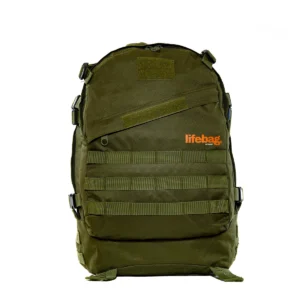
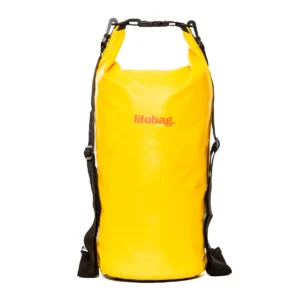
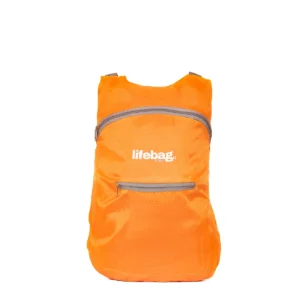
A packed LifeBag works in both situations. Kept by the door, it is ready to grab if you have to leave in minutes. If you stay in, it holds water, food, light, first aid and a radio for the first 72 hours.