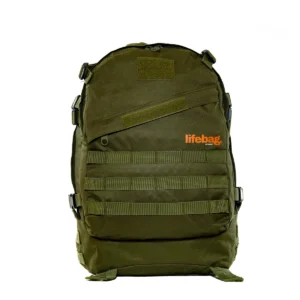
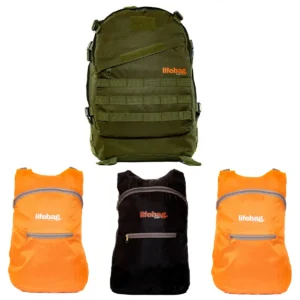
In an emergency—whether it’s a flood, earthquake, fire, or prolonged power outage—preparation can make the difference between coping and despair. One of the most versatile and essential items you can have on hand is an emergency blanket. At LifeBag, we include this item in our emergency backpacks — Basic and Plus — to help you protect yourself effectively. Let’s take a closer look at how it works and how to use it correctly.
What Is an Emergency Blanket?
An emergency blanket is a thin, lightweight sheet made from reflective materials (usually metallised polyester such as Mylar), designed to retain body heat and protect you from extreme conditions. It is compact, fits easily into a backpack like LifeBag, and can be a lifesaver in unexpected situations.
- In LifeBag Basic: You’ll find a standard emergency blanket included in the first aid kit, suitable for basic needs.
- In LifeBag Plus: You get an upgraded emergency blanket with two sides — one silver and one gold — offering additional options depending on the situation.
How It Works and When to Use It
An emergency blanket reflects up to 90% of your body heat, helping you stay warm in cold or wet environments. At the same time, it can be used to protect you from heat or to signal for help. Here are the main scenarios where it proves useful:
Protection Against Cold
If you are outdoors during an evacuation and temperatures drop—for example during winter flooding or after an earthquake—wrap yourself in the blanket with the silver side facing inward. This reflects your body heat back toward you and helps prevent hypothermia.
Protection Against Heat
In case of a fire or exposure to strong sunlight (such as during summer in southern regions), use the blanket with the gold side facing outward (LifeBag Plus). This reflects sunlight and helps keep your body temperature stable.
Signalling for Rescue
Thanks to its reflective surface, the blanket can be laid on the ground or waved to attract the attention of rescue teams. The silver or gold side is visible from a distance, especially in sunlight or headlights.
Improvised Shelter
If you have access to rope or adhesive tape from your LifeBag, you can use the blanket as a wind, rain, or snow barrier. Secure it between trees or other supports to create a small temporary shelter.
Instructions for Use
- Unfold carefully: The blanket is tightly packed. Once unfolded, avoid tearing it — the material is strong but thin.
- Cover yourself completely: To maximise heat retention, wrap it tightly around your body, leaving only your face uncovered for breathing.
- Combine with other equipment: Wear it over dry clothing and use it together with the gloves and mask from LifeBag for full protection.
- Store for reuse: If it’s not damaged, fold it back and store it in your backpack for future use.
Why We Included the Emergency Blanket in LifeBag
In Romania, where flooding in areas like Galați or Timiș, earthquakes in the Vrancea zone, and winter power outages are common, an emergency blanket is indispensable. The basic version in LifeBag Basic supports everyday emergency needs, while the double-sided blanket in LifeBag Plus offers extra flexibility—whether you need warmth, sun protection, or visibility for rescuers.
Final Tip
Whether you choose LifeBag Basic or Plus, keep your backpack in an accessible place—near the door, in the hallway, or in your car trunk. The emergency blanket, together with the other equipment, will help you get through the first critical 72 hours of an emergency.
Preparation is key—and LifeBag is your trusted partner.